

SVTR AI Venture Camp · AWE 2026 Shanghai · March 12 to 15, 2026
At one end of the row of orange booths in Hall W1 sits BOE. A few dozen meters ahead are Huawei, Xiaomi, JD.com and Lenovo; turn around and Unitree and AgiBot are on the other side. The fifteen booths wedged in between belong to companies mostly headquartered in Silicon Valley, most of them under three years old, several of whose teams had never set foot in China before.
This was the SVTR 2026 Spring AI Venture Camp. Over a thousand applications, three rounds of review, fifteen companies selected; thirty days from drafting the application form to landing in Shanghai. Ifeng Finance introduced the exhibitor list company by company, and Jiemian News reported from the floor.
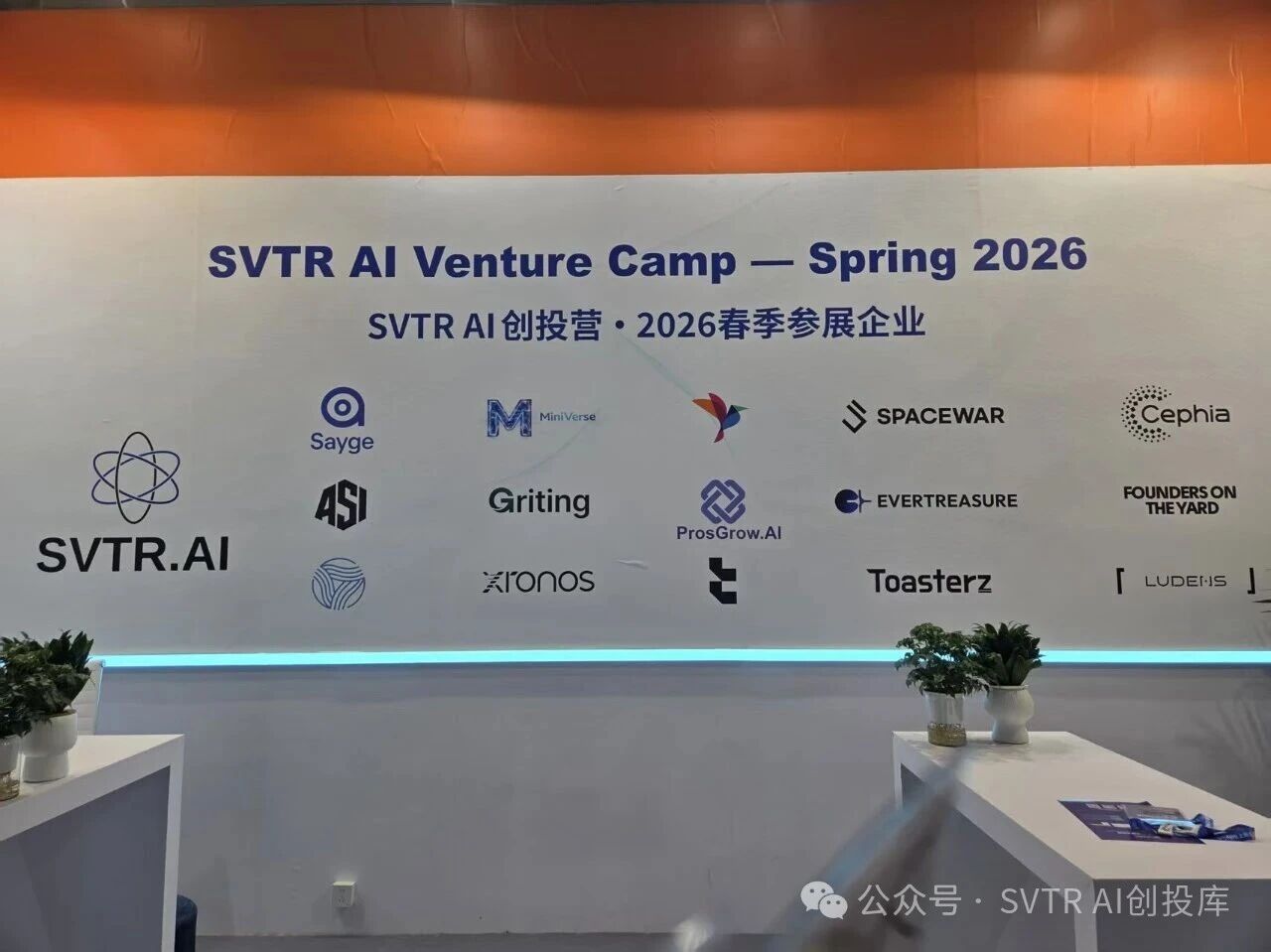
The list looks scattered until you change the question
Lay the fifteen businesses side by side and the first impression is that they do not add up to a theme.
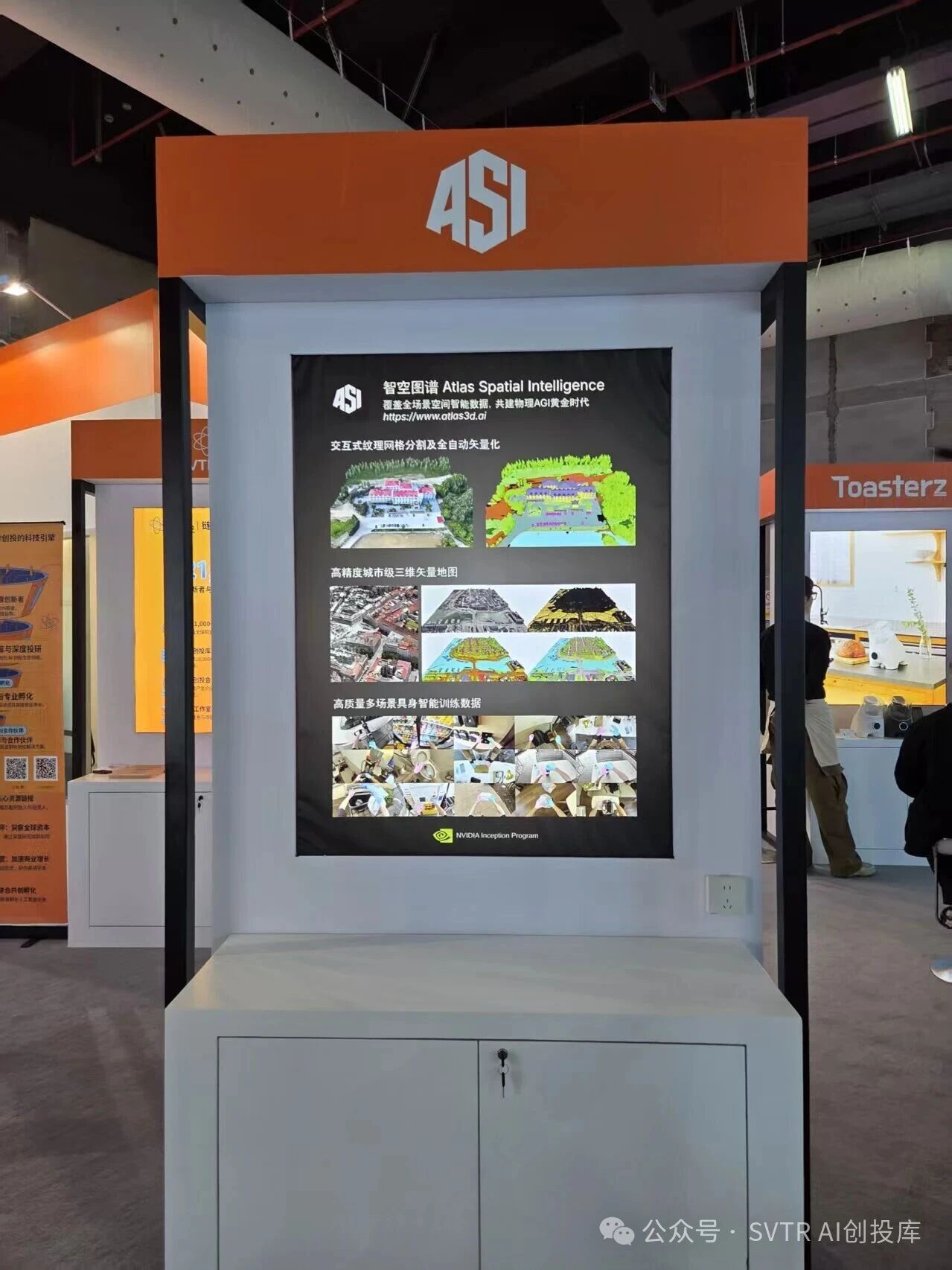
- Space and sensing: ASI's city-scale 3D vector maps, SPACEWAR's autonomous drone infrastructure, Cephia's metasurface spectral chips
- Robotics and devices: Xronos's robotics software, Toasterz's smart fermentation appliance
- Enterprise applications: ProsGrow.AI's lead-generation agent, Sayge's business consulting and ad creative, OpenAgents's agent collaboration network, Griting's talent assessment
- Interaction and content: MiniVerse's real-time vision and audio adaptive learning agent, FanDoor's 3D creation tool
- Cultural assets and community: EverTreasure with its YEATU and EverlynQ product lines, and Founders on the Yard, an incubator for US college founders
By sector label this is indeed a list that does not cohere. But ask a different question and it snaps into focus: how many of these fifteen ship something physical in the end, or need to be embedded inside someone else's physical product?
More than half. Chips, drones, robots, home appliances, spatial data capture; none of them get around needing a production line.
What they came to buy was not orders
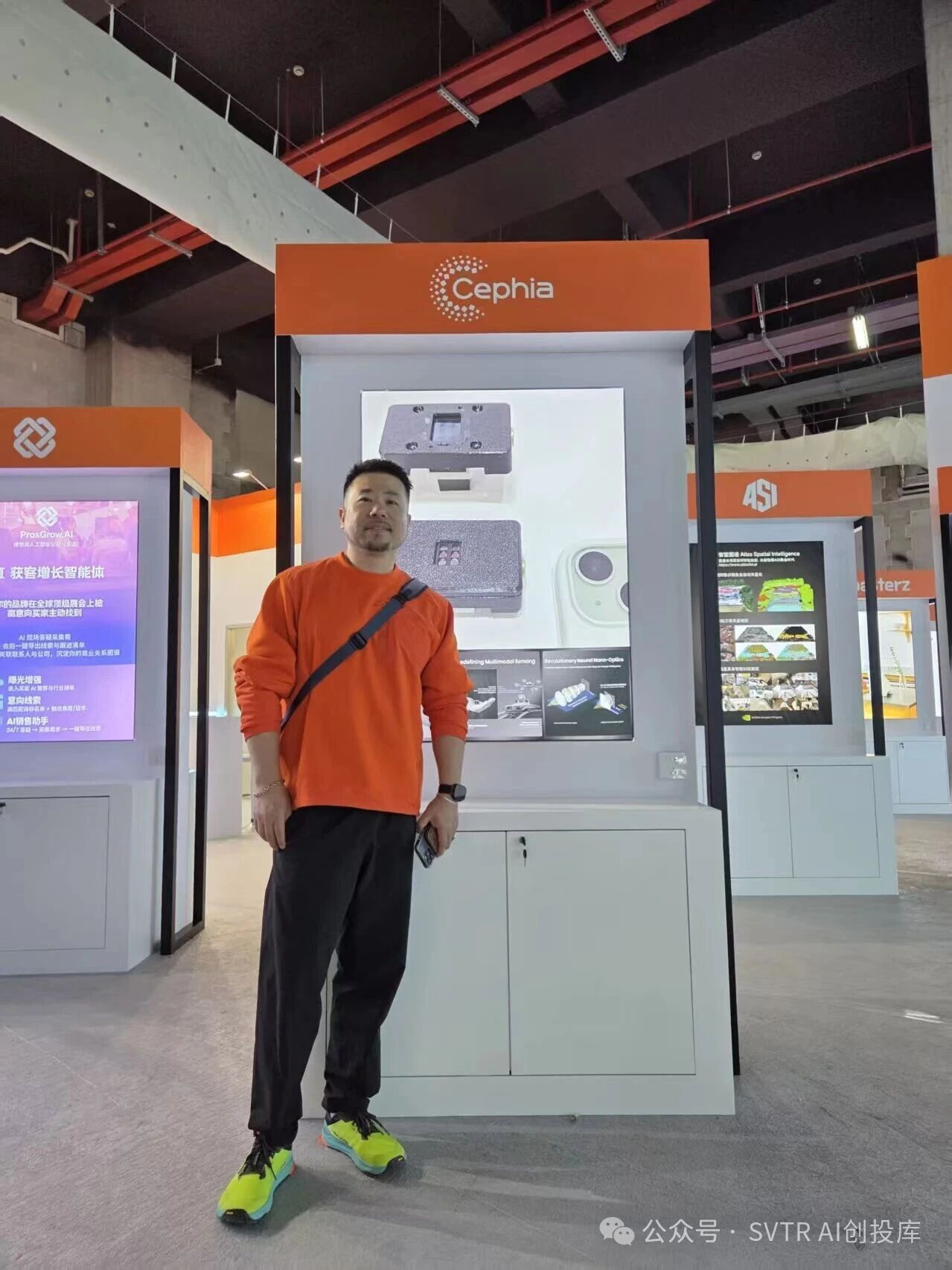
Cephia is the clearest case in the group. It uses metasurface technology to make conventional spectral chips smaller and cheaper, and the core manufacturing step in that process is something US domestic capacity cannot absorb. According to a named report by Jiemian News, Cephia established supply-chain contacts in the Yangtze River Delta and Shenzhen through the delegation.
The itinerary says the same thing. In the same week, more than thirty founders from around the world visited six locations: AWE Shanghai, Suzhou Industrial Park, Xuhui Model Space, the Maqiao AI Innovation Zone, Zhangjiang AI Town and the Lin-gang New Area. Not one of the six is a capital market or a fundraising venue. All six are industrial and manufacturing nodes.
The booths themselves carry the same signal. ASI's panel has the NVIDIA Inception mark at the bottom, FanDoor's screen lists its Antler selection and its partnership with RISE Sweden, Xronos shows Plug and Play and TechCrunch. On the Silicon Valley side these companies have the credentials covered. What they lack is neither validation nor money.
Where this judgment stops holding
The fair collapses into one line: when AI moves off the screen and into the physical world, the first problem Silicon Valley companies cannot solve on their own is not the model, it is who will build the thing. China's role, in the eyes of this cohort, is shifting from "a large market" to "a production line that can actually start running."
That judgment has a clear boundary and it is worth stating. The pure software companies on the list fall outside it: Sayge, OpenAgents, Griting, YEATU and EverlynQ came for market access, partners and visibility, and need no production line. Sayge's booth listed 28,067,791 dollars in validated pre-spend and 87.5% decision accuracy; that is the company's own figure on its public booth material and SVTR has not independently verified it.
The other thing worth stating plainly: "made contact" is a long way from "delivered." Most of the parties shaking hands at the fair have not reached the sample-and-quote stage, let alone volume production. How many of these companies actually get a Chinese production line working will not be visible until the second half of this year.
One variable worth tracking
If the judgment above holds, one change should become observable over the next year: when early-stage hardware companies in Silicon Valley raise, investors will start asking "where is the supply chain and who absorbs it" as a separate diligence line item, rather than folding it into a single line about manufacturing. That is not yet common practice. Once it becomes common, it means what this cohort ran into was not an individual difficulty but a structural gap.