

SVTR AI Venture Database · July 31, 2026
Six days before liquidation, Leopold Aschenbrenner was still writing to investors, calling the AI stock pullback in July "the most attractive opportunity since early 2025" and inviting them to add capital before August 1. Six days later, he was margin-called by three prime brokers and forced to discount his entire public portfolio to Ken Griffin's Citadel.
The event was a textbook example of deleveraging. After leaving the OpenAI Super Alignment team in 2024 and publishing a long essay, "Situational Awareness," Aschenbrenner launched a fund of the same name, leveraging about four times to heavily bet on public AI stocks. In this pullback, holdings like SK Hynix, Sandisk, Bloom Energy, Nebius, and CoreWeave all plummeted, and the three prime brokers—Goldman Sachs, JPMorgan, and Bank of America—simultaneously margin-called the fund, forcing it to liquidate all public positions within a day. According to multiple media reports (Bloomberg, CNBC), its AUM dropped from a peak of about $45B to about $10B.
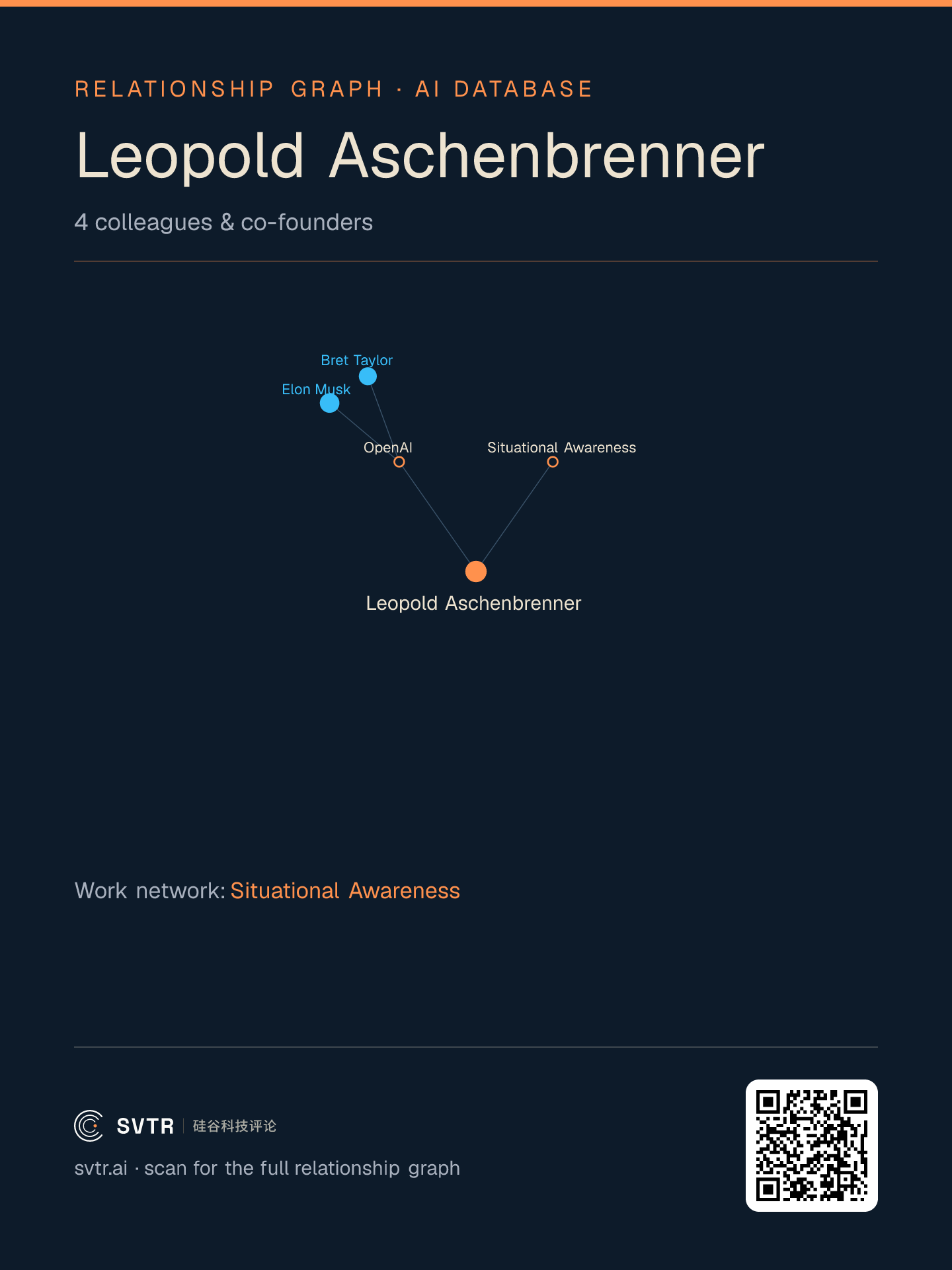
Reading the chart: After leaving the OpenAI Super Alignment team, Aschenbrenner founded his own fund, but his network remained tightly connected to the core of the AI model ecosystem.
What is worth noting is not the liquidation, but what he sold and what he kept. All public stocks were sold, but none of the private holdings were touched. The core was about $5B in Anthropic equity (entered at a $60B valuation in early 2025, according to the SVTR AI Venture Database, with Anthropic's H-round valuation reaching $965B in May 2026), as well as early-stage deals like MatX and Fluidstack. This was a passive vote: when the margin call came, the leveraged public AI stocks were sold first, while the private equity stakes in the top-tier were held tightly. The pricing of public AI assets had become so fragile that it couldn't withstand even one round of deleveraging, while the top-tier private equity was still seen as the last anchor.
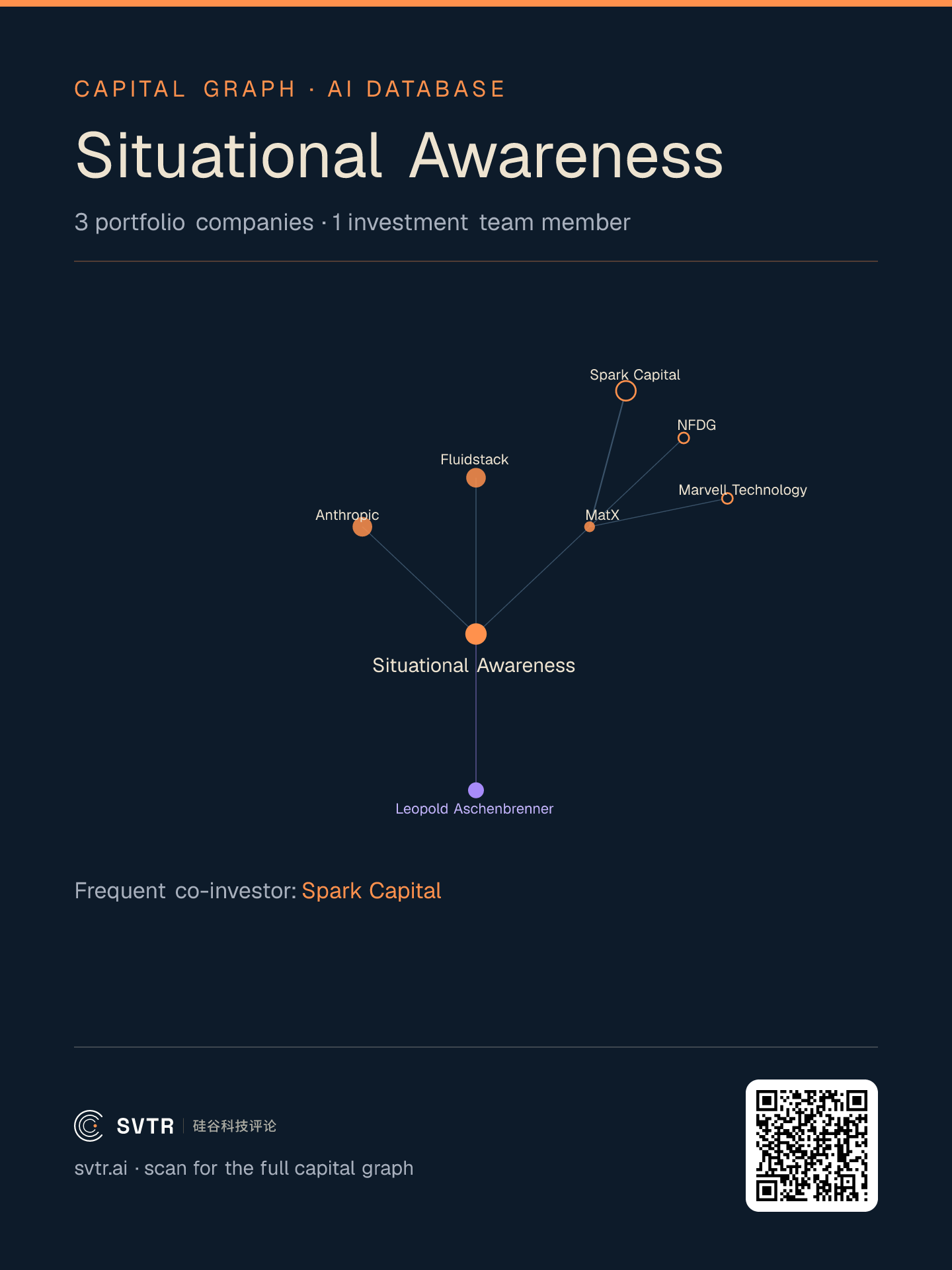
Reading the chart: The public stocks were liquidated, but none of the early-stage holdings in the chart were sold: Anthropic is the anchor, MatX is a chip-side bet, and SA's money was always placed at the very top of the AI model and computing supply chain.
But the word "anchor" should be questioned. The fund's spokesperson denied selling Anthropic equity. Keeping Anthropic may not be about belief, but also because private equity stakes simply had no immediate buyers: in a panic, it might be hard to find anyone willing to buy at a discount. The "stability" of the private valuation partly comes from the fact that it hasn't been re-priced daily by the public market. This is exactly the key to understanding the event, rather than directly reading "keeping private" as a bullish signal.
In China, this logic has no foothold. Zhipu (HK 2513), which went public on January 8, 2026, and MiniMax, which went public on January 9, had already moved the top-tier AI model valuations into the public market, and whether they are an anchor is determined daily by the secondary market pricing. There is no option for Aschenbrenner's "keeping money in private to avoid volatility." The pricing transparency of China's top AI assets is higher, but the cost is that there is no private valuation cushion to buffer panic.
In the next one or two quarters, three variables will determine whether this "selling public, keeping private" move is a structural signal or an isolated case:
- Whether the next pricing point for Anthropic is up or down. The SVTR AI Venture Database has recorded an Anthropic listing update on July 16, 2026. If a filing or a new term sheet appears in Q4, and the valuation is higher than $965B, the anchor narrative holds. If it has to be discounted or delayed, it suggests that the "stability" of the private market is also starting to waver.
- Where the cut public AI computing stocks stabilize. If SK Hynix, CoreWeave, and Nebius continue to hit new lows after deleveraging, it suggests that the market is cutting not just leverage but fundamentals, and top-tier private equity will not be immune.
- Whether a second high-leveraged AI-themed fund is margin-called. One is an isolated case, but two or more would be a signal of systemic deleveraging in the AI secondary market, a direct alarm for infrastructure funds and secondary investors' portfolio management.
This article is part of the SVTR Radar series, complementing weekly market observations, tracking immediate judgments on major AI venture events. More detailed financing and capital maps can be found in the SVTR AI Venture Database.