

30 employees, close to 100,000 doctors, lawyers and engineers, $30.5 million raised, a $3.2 billion valuation.
Table 1|AfterQuery key figures (as of 2026-09-04)
| Item | Figure | Time anchor |
|---|---|---|
| Reported valuation | $3.2B | 2026-09-01 (per Forbes) |
| Prior round valuation | $300M | 2026-04 |
| Total raised | $30.5M | Per SVTR AI Venture Database |
| Annualized revenue | ~$100M | 2026-04 |
| Full-time employees | 30 | Per YC company page |
| YC batch | Winter 2025 | Early 2025 |
Editor's Note: AfterQuery is under two years old, was reported this week at a $3.2 billion valuation, is said to be profitable, and has taken $30.5 million from investors in total. SVTR's interest lies elsewhere: the company begins with a failure. Its founders built an AI application first, lost to the model's hallucinations, then turned around and made the thing that beat them into their business. That pivot tied a company's fate to a technical defect, which is worth pricing now.
An application written in 48 hours, and an apartment with no direction
In early 2025, ahead of Y Combinator's winter deadline, Spencer Mateega and Carlos Georgescu put an application together in 48 hours. Both were still in school. They had no product and no settled idea. What they had was a destination: San Francisco.
By Mateega's own later account on X, he, Carlos Georgescu and Danny Tang walked away from a combined $850,000 in stable jobs across quantitative trading, investment banking and big tech, then crowded into a two-bedroom apartment in Dogpatch with zero revenue and no direction.
Eighteen months later, YC partner Gustaf Alströmer called it the fastest company in YC's history to reach a billion-dollar valuation.
What these two are really betting on is not a data business but the persistence of the model's defect. They were beaten by that defect while building an application, then decided to stand on the other side of it and collect.
A finance mouth and an engineering pair of hands
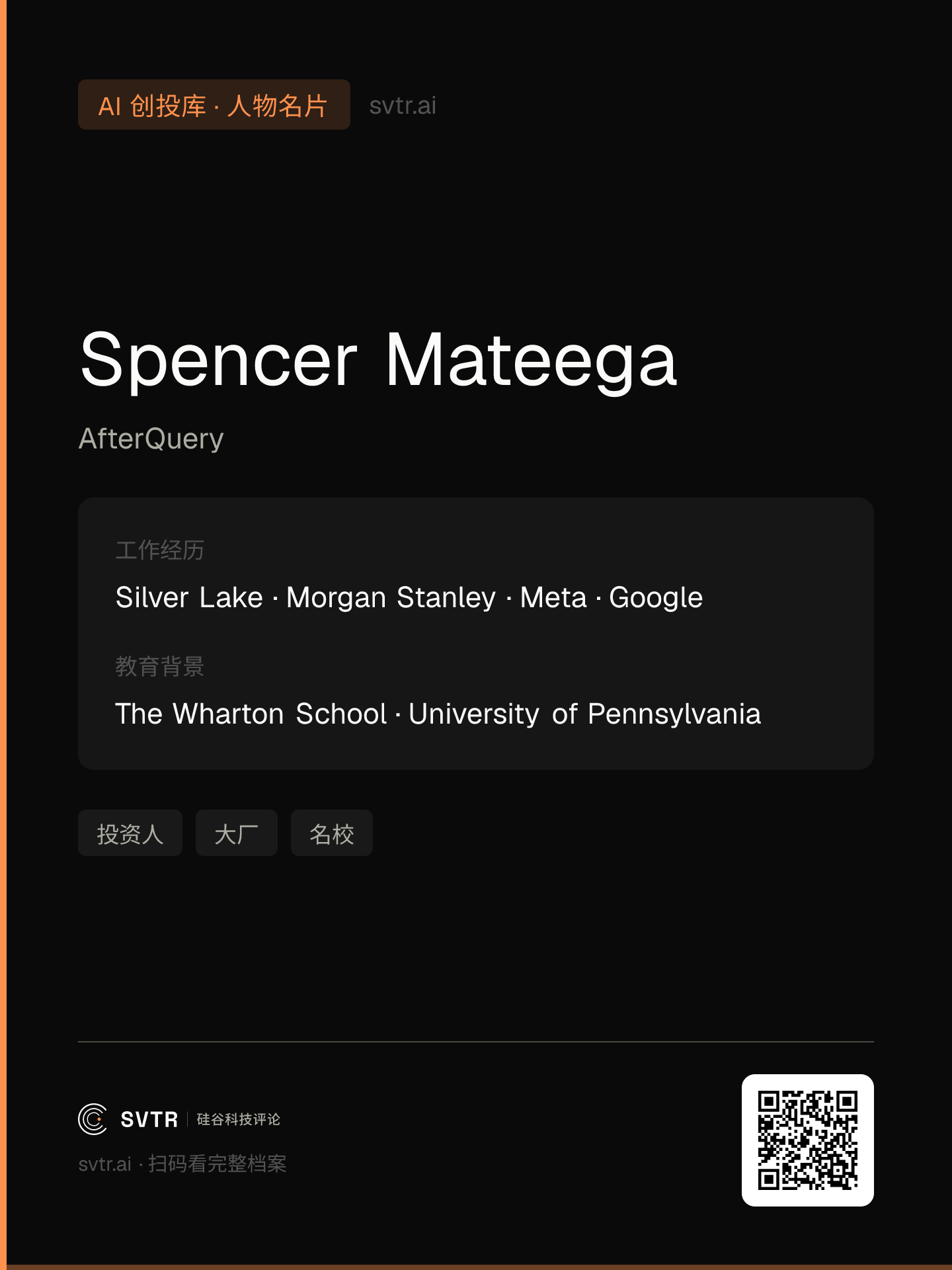
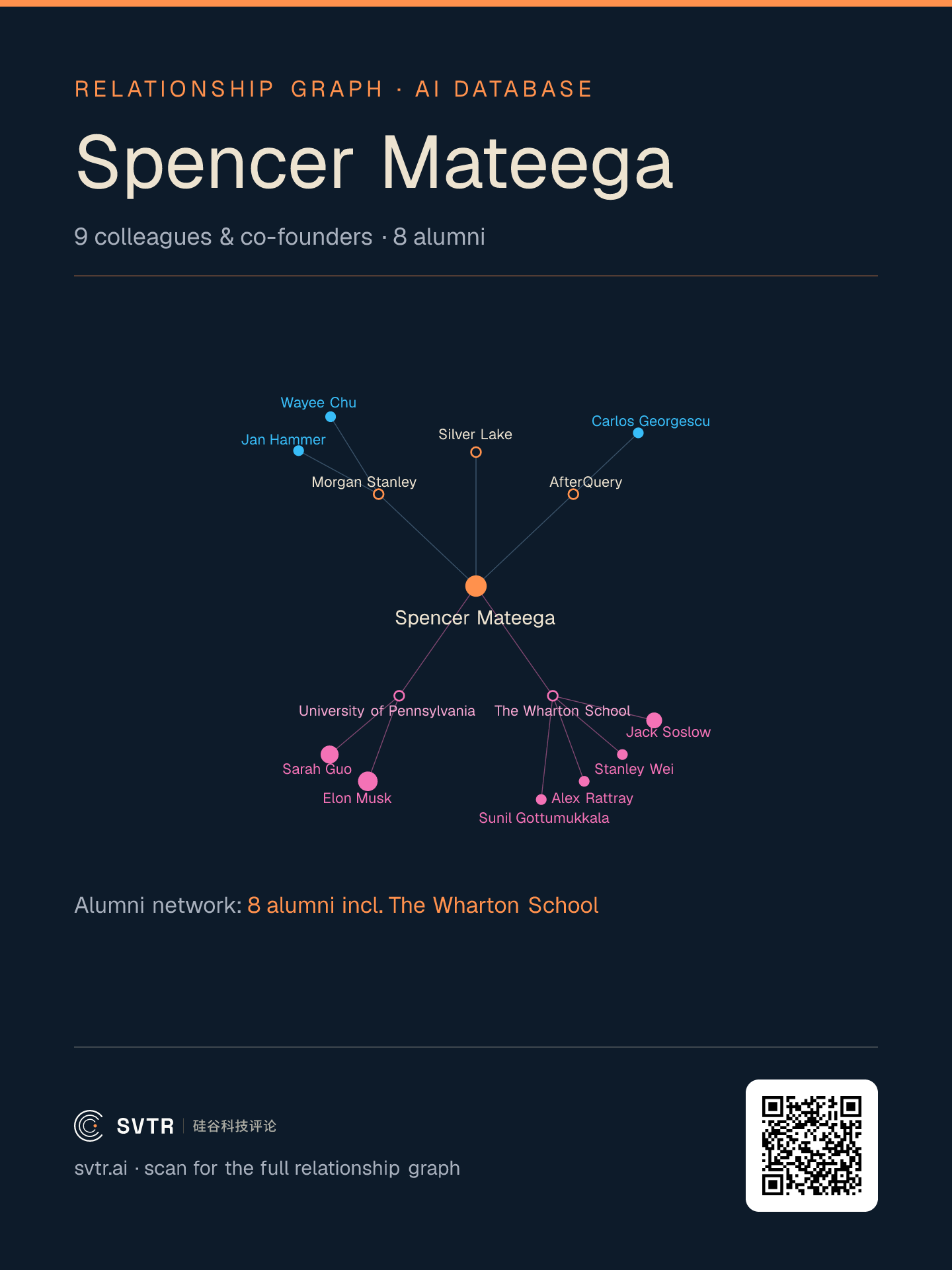
The two met in high school at a Google-run computer science summer program, bonded over engineering projects, stayed in touch through college, interned together at Meta, then split off into finance and tech.
On paper they complement each other. Mateega interned in technology private equity at Silver Lake, in investment banking at Morgan Stanley, and wrote code at Meta and Google; he holds a B.S. in finance and statistics from Wharton and an M.S. in computer science from Penn. Georgescu was at Citadel Securities twice, also did software engineering at Meta and Google, holds a B.S. in computer science from the University of British Columbia, and had already founded an ed-tech startup that was acquired.
That background gets used repeatedly later. One of them understands what professional judgment sells for; the other has been through a full startup cycle already. It explains why they were willing to price a business on the working hours of doctors, lawyers and financial analysts, and why they turned so quickly when the first product failed.
What prompt engineering could not fix became the product
The first product was an AI agent automating professional-services work. Danny Tang and Mateega secured pilots, but the product did not hold up: the agent hallucinated, missed the nuance that professional work runs on, and returned wrong answers. They tried prompt engineering. The underlying accuracy problem would not move.
Most teams at that point keep tuning the model and swapping frameworks. These two switched sides. What the model lacked was the layer of professional judgment and step-by-step reasoning, so they stopped building on top of the model and went to make the raw material fed into it, across finance, software engineering, law and medicine.
On its YC page the company now describes itself as an "applied research lab curating data solutions for foundation model development. Serving every frontier AI lab."
SVTR观点The commercial value of this pivot exceeds its technical value. People building applications hit hallucination and typically treat it as an engineering problem to be solved; these two treated it as a market structure they could bill against for years. Whether they are right turns on how long the defect lives. Compare Scale AI's generation: demand for autonomous-driving annotation did last for years, but once customers built the capability in-house, supplier pricing power fell away quickly. AfterQuery's ceiling is set by when its customers stop needing it, not by how well it executes.
Why this company barely wants investor money
$30.5 million supporting a $3.2 billion valuation is a rare ratio in AI's private market. The April 2026 round was $30 million at $300 million. Five months later the price is ten times higher, with no large check in between.
The reason is the cost structure. Per the SVTR AI Venture Database, Scale AI, the previous generation of this layer, raised $15.3 billion against roughly $950 million annualized, while Surge AI has disclosed roughly $25 million in funding against roughly $1.4 billion of 2025 revenue (revenue per Sacra estimates). Scale's cohort built its own labeling platform, delivery teams and quality control, with money locked into fixed assets and salaries, which meant raising before earning. AfterQuery's generation settles delivery one task at a time. The nearly 100,000 doctors, lawyers, engineers and financial analysts it works with (per Forbes) do not sit in an office. They are in their own clinics, firms and desks, taking a task, writing it up, getting paid for it. Revenue doubles and payouts double with it, and nobody fronts the cash.
So investors cannot buy much stock here. They can only bid the price up. That is also the key to reading this round: the size and the lead investor remain unannounced, the $3.2 billion comes from press reports, and the company has not confirmed it.
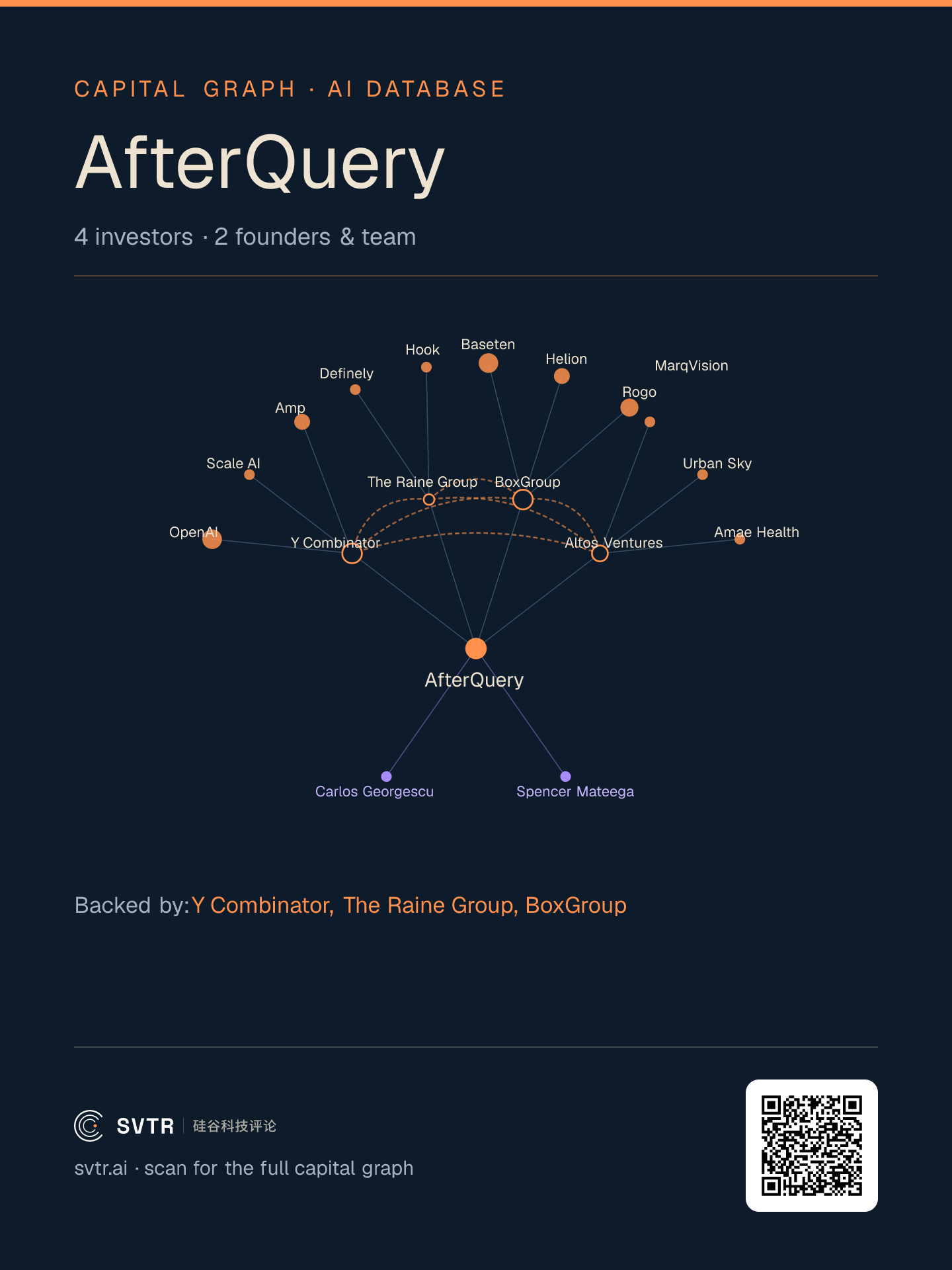
Per round-level records in the SVTR AI Venture Database, AfterQuery's prior backers are Y Combinator, The Raine Group, BoxGroup and Altos Ventures, all modest in size, with no large growth fund among them. One easily missed coincidence: Y Combinator's portfolio holds both Scale AI and AfterQuery, putting both generations of this layer in the same hands.
Thirty people managing a hundred thousand
The YC page lists AfterQuery's team at 30. Those 30 people handle close to 100,000 outside professionals.
Mateega told Forbes in April 2026 that their edge over Mercor is proprietary validation software. Mercor screens from large contractor pools using an AI interviewer; AfterQuery runs expert output through a series of checks, requiring it to land in a "Goldilocks" range, hard enough to challenge state-of-the-art systems without stumping them outright.
This account rests on his own statement, with no third-party verification, and SVTR cannot independently confirm the actual rejection rate at the validation stage. But the intent behind the org design is clear: quality control is handled by software. That is what lets 30 people manage 100,000, and it is the only part of this operations business that looks like a technology company.
Its customers are the people most determined to make it unnecessary
On competition, AfterQuery is currently the smaller party. Mercor disclosed annualized revenue above $2 billion in June 2026, though that figure is annualized gross platform volume; at a take rate of roughly 30%, what lands on its own books is closer to $600 million (per Sacra and public reporting). Even net of take rate, that is several times AfterQuery's $100 million. Mercor's October 2025 Series C was led by Felicis at a $10 billion valuation, and it was reported in July 2026 to be raising $500 million at $20 billion.
The deeper risk is not the competition. It is the customers. AfterQuery serves frontier AI labs, and what those labs work on day and night is teaching models to reason on their own. Demand for this business comes from models not being good enough, while the customers' goal is to make them good enough.
SVTR观点The real valuation disagreement about these companies is about the denominator, not the growth rate. Treating gross platform volume as revenue systematically understates multiples in this layer. Investors looking here should meet an impressive annualized revenue figure with three questions: is this gross volume or revenue net of take rate, what is the take rate, and how much do the largest customers each account for. Customer concentration here is extreme, and revenue quality is not the same thing as a software company's recurring base.
The same business reads differently in China. Haitian Ruisheng (688787.SH), the listed leader in AI training data there, reported 2025 revenue of RMB 377 million, up 59%, with net profit of RMB 14 million, a net margin under 4%, and gross margin down 18.38 percentage points to 48.08%. Both sides do what is called AI training data, but they sell different people's time. The American cohort sells the output of a practicing doctor or lawyer making one judgment. The Chinese cohort has long sold annotation hours, where workers are findable and replaceable and prices get pushed down by capacity competition.
A bet on how long a defect lives
Two people in their early twenties walked away from $850,000 in salaries, crowded into a two-bedroom apartment, failed at the first thing they tried, and got to $3.2 billion on the second in 18 months.
Their bet has always been the same one: that the model's defect will persist. So far it holds. The freely scrapable text on the open internet is close to exhausted as training material, the reasoning models need next is written only in practitioners' heads and has to be bought one task at a time, and the buyers hold plenty of cash and will prepay and sign long contracts.
One question is worth watching: when will their customers get models to do this reasoning themselves. SVTR's verifiable observation point is customer structure. If AfterQuery's revenue over the next four quarters still leans heavily on a handful of frontier labs, its valuation is essentially a derivative of those customers' procurement budgets. If it can spread revenue into vertical enterprise customers, the business finally becomes independent of how long the defect lives.
The SVTR AI Venture Database holds round-level funding and valuation records for AfterQuery, Mercor, Surge AI, Scale AI, Micro1 and Prolific. SVTR members can pull the full round-level data in the funding explorer, filtered by sector and stage.
Appendix: Sources and methodology
Primary sources: Forbes reporting on this round's valuation (2026-09-01) and on the $100 million run rate (2026-04-09); the official Y Combinator company page (team size, founder backgrounds, official positioning); TechCrunch's report (2026-09-01).
Secondary sources (subject's own account): Mateega's statement on X about walking away from $850,000 and moving to San Francisco; Mateega's April 2026 remarks to Forbes on the validation system and the "Goldilocks" range. Both are the subject's own account and are not independently verified.
Secondary sources (third-party observation): Sacra's revenue and valuation estimates for AfterQuery, Mercor, Surge AI, Scale AI, Micro1 and Prolific, all estimates; Haitian Ruisheng's 2025 annual report and 2026 first-quarter disclosures.
Cross-validation: Total funding, rounds and valuations are cross-checked against round-level records in the SVTR AI Venture Database as an independent source.
Disclosed information gaps: This round's size and lead investor remain unannounced and the $3.2 billion valuation is unconfirmed by the company; the validation system's effectiveness has no third-party verification; AfterQuery's customer concentration, gross margin and take-rate structure are undisclosed; the database records a 2024 founding year, conflicting with the February 2025 founding cited by several outlets, so this piece avoids any inference that depends on the founding year; the role and equity arrangement of third early member Danny Tang have not been publicly disclosed.