

10 matching
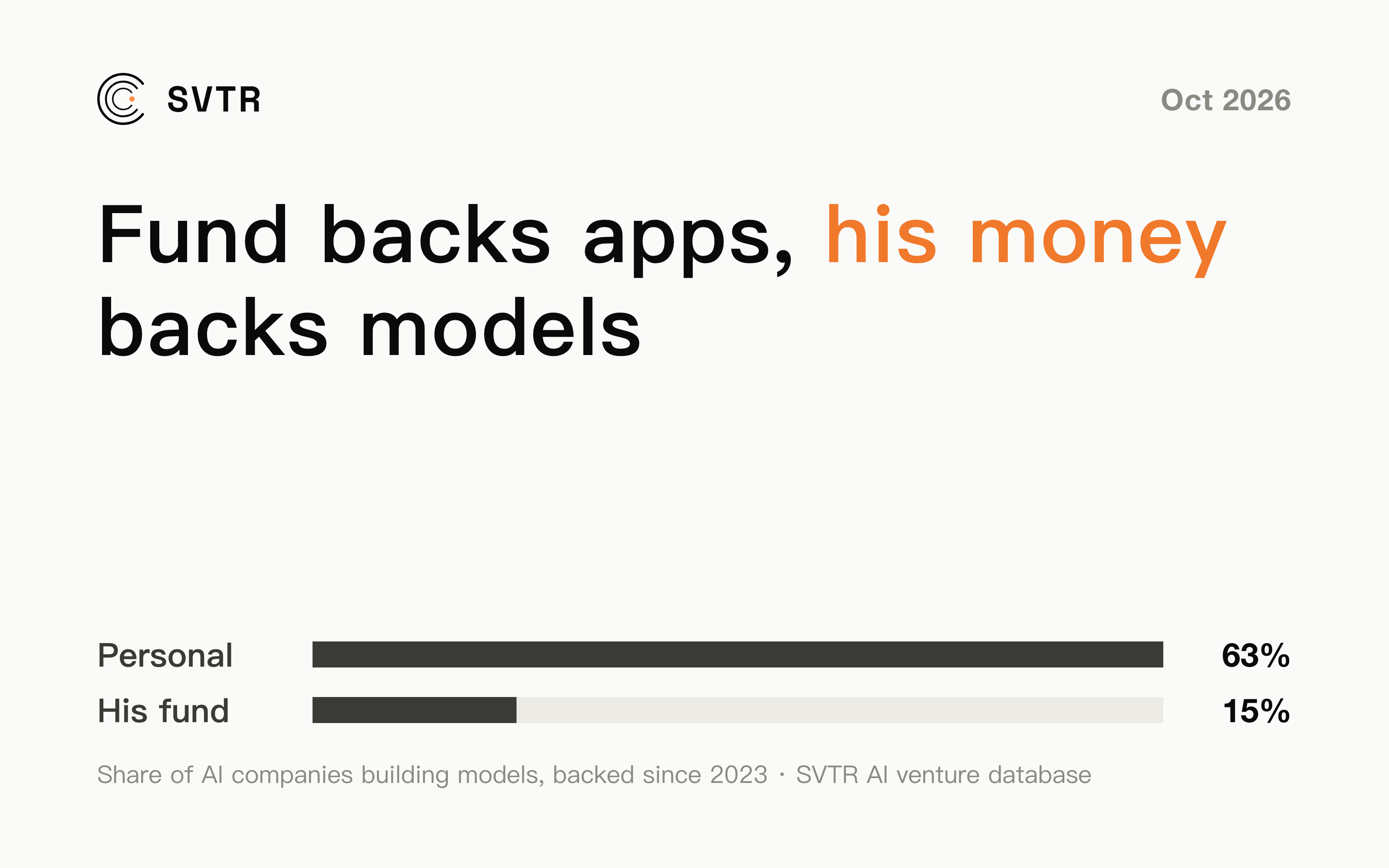
Bloomberg reports Eric Schmidt owns about 1% of Anthropic. According to the SVTR AI venture database, 13 of the 20 AI companies he has backed in his own name train their own models, versus 4 of 27 for Innovation Endeavors, the fund he co-founded, since 2023. His fund backs apps; his own money backs models, and Anthropic is the first of those bets to pay off.
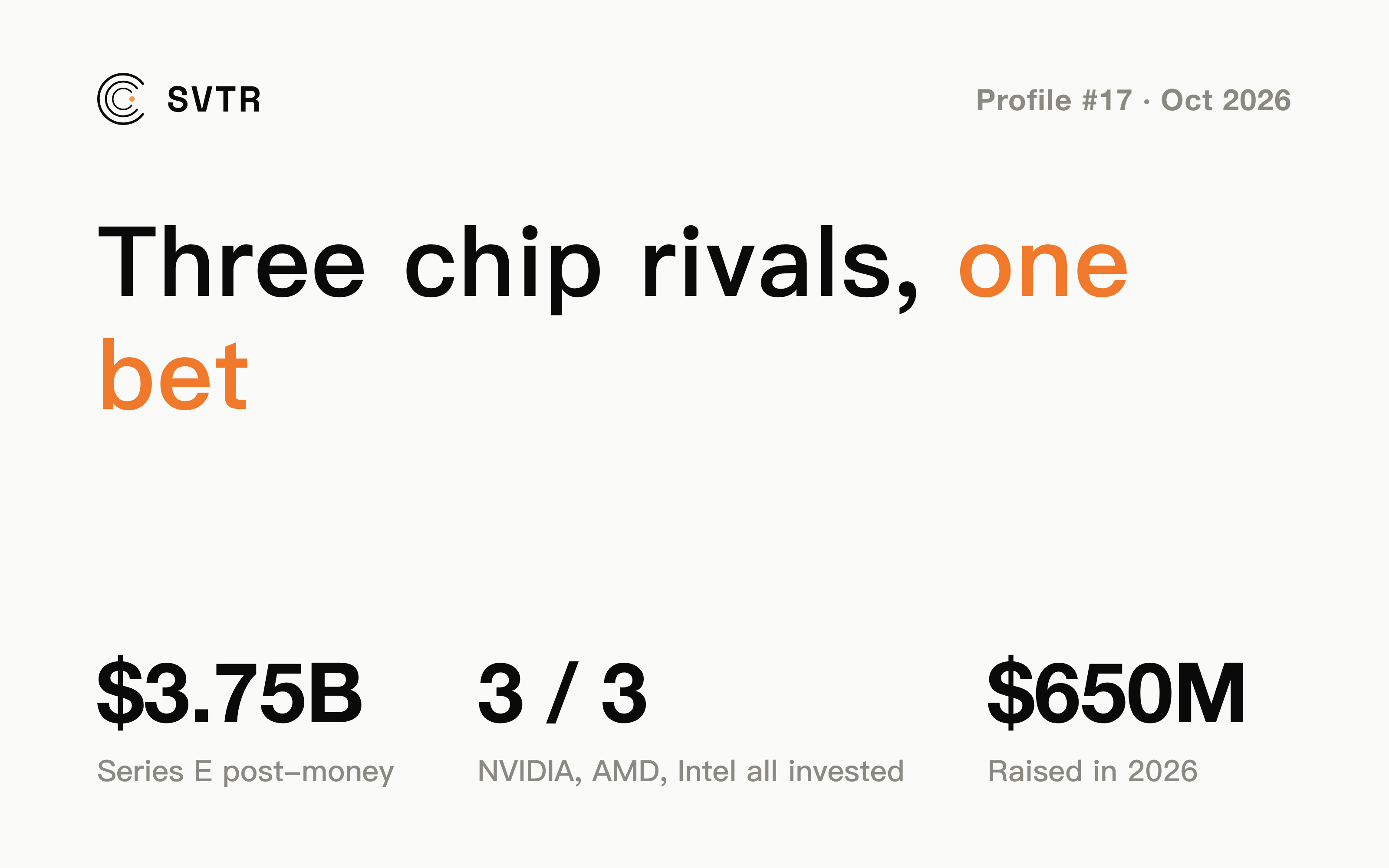
In February 2026 Celestial AI sold itself to Marvell. A month later Ayar Labs, working on the same problem, raised a $500 million Series E at a $3.75 billion valuation. The SVTR AI Venture Database shows it is the only one of 61 interconnect companies backed by NVIDIA, AMD and Intel alike. We argue the valuation pays for a neutral position, which pays off only when a major puts its optical chiplets into production racks.
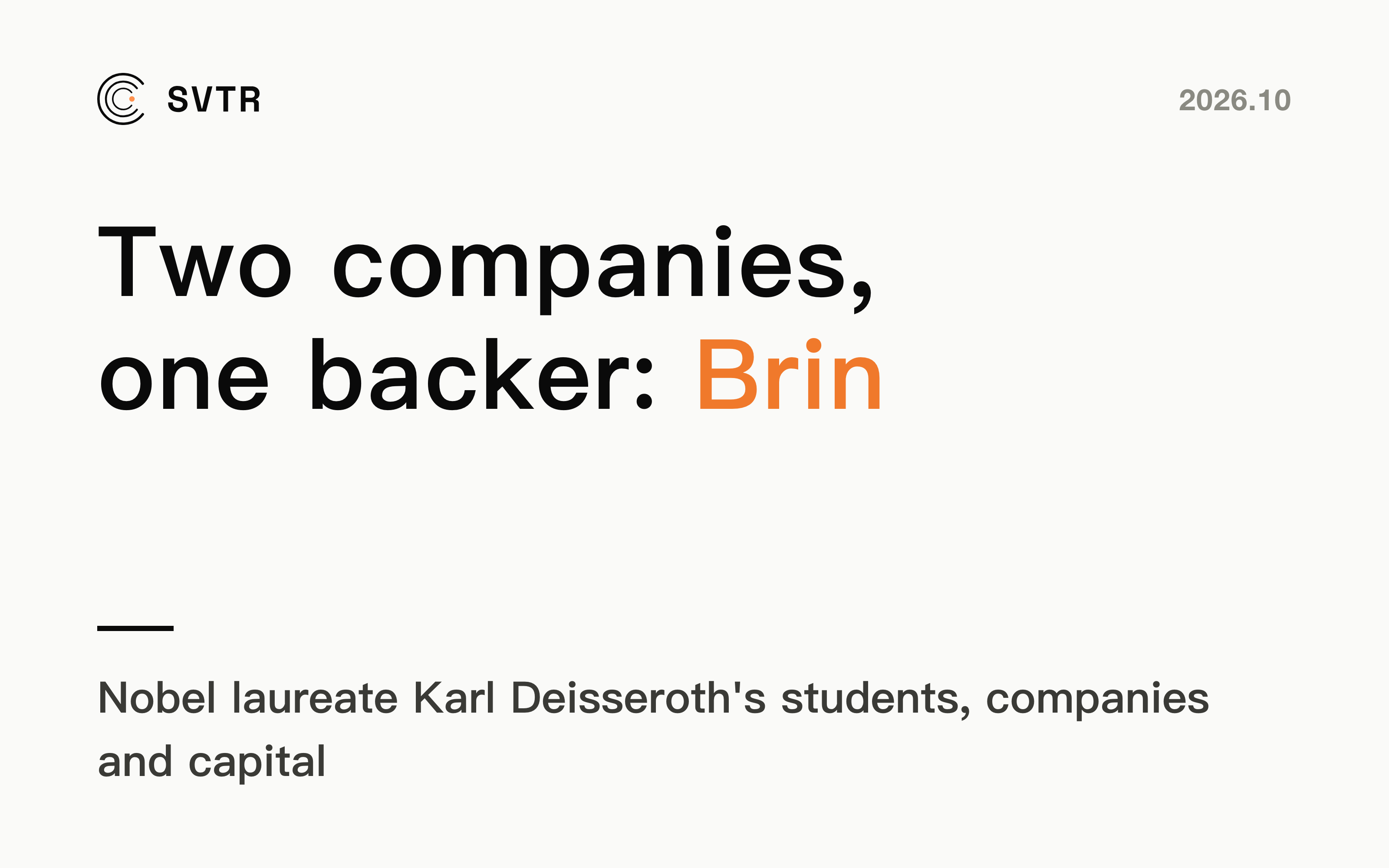
Karl Deisseroth, a 2026 Nobel laureate in Physiology or Medicine, opened optogenetics to the world almost for free while co-founding four companies. The two still advancing, MapLight and Stellaromics, share one largest shareholder: Catalyst4, the nonprofit founded by Sergey Brin. We map the students, companies and capital around him.
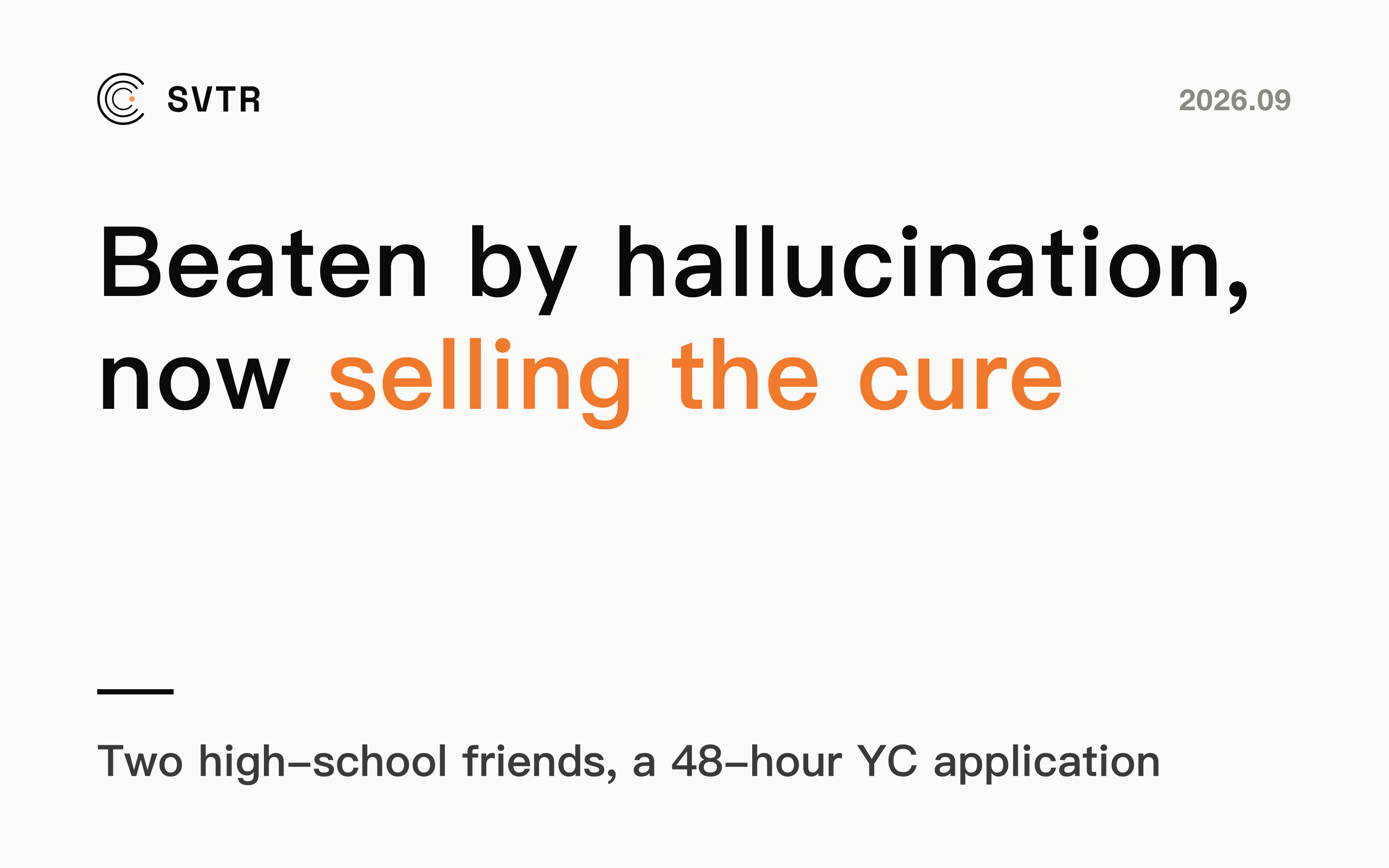
Spencer Mateega and Carlos Georgescu went to high school together and put a Y Combinator application together in 48 hours in early 2025, with no product and only a destination: San Francisco. By Mateega's own account on X, the three of them walked away from a combined $850,000 in stable jobs. Eighteen months later AfterQuery was reported at a $3.2 billion valuation and is said to be profitable, having taken $30.5 million from investors in total. SVTR's call: what these two are betting on is not a data business but the persistence of the model's defect. Beaten by hallucination while building an application, they turned around and made that defect their business, with 30 employees serving close to 100,000 doctors, lawyers and engineers. The risk is not the competition but the customers: the frontier labs they serve work day and night to stop needing them.
Stripe is acquiring OpenRouter for a reported ~$7.5B. The company trains no models and owns no compute; it raised just $153M over three years, yet cashed out before inference clouds that raised over ten times as much. SVTR breaks down its aggregation playbook, the 5.5% take-rate model, the acquisition signals hiding in its Series B cap table, and why China never grew an equivalent.
In the public eye, Elon Musk is a social media provocateur, a space enthusiast, and an extreme manager. But to those who have truly studied him, he is a founder who has continuously iterated the same startup algorithm across 40 years and 8 companies without interruption. In this episode of Founders, host David Senra distilled Walter Isaacson's biography of Musk through 60 hours of deep reading and 40 pages of notes, extracting the consistent work principles that have guided Musk across Zip2, PayPal, SpaceX, Tesla, Neuralink, Boring Company, X (formerly Twitter), and xAI. SVTR views this as the most hardcore foundational methodology for building future companies.
Flagship-incubated Lila wants to hand all of R&D to AI plus robots; in eight months its valuation hit a rumored $8.5B on just $550M confirmed and zero revenue. The same 'AI platform discovers by itself' promise was already made by Recursion, Exscientia and peers, who have yet to ship a single approved drug. SVTR unpacks the data flywheel, Flagship's markup logic, and China's orders-first path via XtalPi and DP Technology.
Conviction's Sarah Guo sits closest to the AI frontier yet bets against it: that OpenAI and Anthropic cannot build everything, and that the application and inference layers still leave room for independent companies. Per SVTR's AI venture database, capital has so far concentrated upstream (the model layer alone has raised about $523B, with two firms taking nearly 80%), running opposite to her wager. The tell will be the day the first of her companies rings the IPO bell.
Whether it's ChatGPT, Claude, or DeepSeek, every conversation carries a heavy electricity bill behind it. SVTR's AI database shows global AI data center energy demand is set to double by 2026, reaching the level of an entire country's power consumption. Liquid cooling and other emerging technologies are cutting cooling-related power draw, but a fundamental break past the efficiency ceiling requires rethinking the computing architecture itself.
What did the OpenAI board that fired Sam Altman look like?